
SLS Printer or SLS Printing Service: Should You Buy or Outsource?
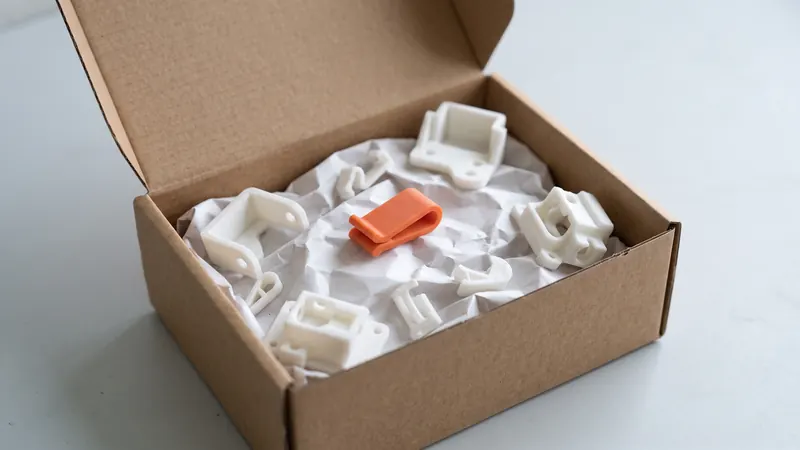
Selective laser sintering makes tough nylon parts without support structures, so sooner or later many engineering teams ask whether they should buy their own SLS printer. The printer itself is only part of the answer. This guide explains what running SLS in-house involves, from powder handling to finishing, which questions decide whether a printer pays off, and when ordering parts from a service is simply the better deal.
The short answer
An SLS printer pays off when three things come together: you need parts often and regularly, you can fill the chamber most of the time, and you have space, people and time for the process around the printer. If one of these is missing, a printing service usually gives you the same parts with less risk, because you pay only for parts you actually order.
What an SLS printer does, and what it does not
In SLS, a laser fuses thin layers of nylon powder in a heated chamber. The unfused powder around the parts supports them, so parts can be stacked in three dimensions without any support structures. After the print job, the whole powder cake cools down slowly before the parts can be unpacked. What comes out of the printer is not a finished part yet: it is a part covered in powder that still needs to be cleaned, blasted and, if required, dyed.
That is why the decision is about the whole workflow, not about the machine alone.
What running SLS in-house involves
| Step | What it takes |
|---|---|
| Print preparation | Software and know-how to orient and nest many parts in one print job so the chamber is used well |
| Printing | A controlled, inert atmosphere, stable power and room climate, regular maintenance |
| Cooling | The powder cake cools for hours after each print job; the chamber is not free during that time |
| Unpacking and depowdering | A station for breaking out the parts and recovering unused powder, with dust protection |
| Powder management | Storing, sieving and mixing used powder with fresh powder in the right ratio, keeping records |
| Finishing | Blasting to remove remaining powder and smooth the surface; polishing and dyeing if needed |
| Quality control | Measuring parts, checking dimensions and surfaces, handling rejects |
Each of these steps needs equipment, floor space and someone who knows how to do it. In our own production, every part goes through depowdering and glass-bead blasting and polishing in a DyeMansion Powershot DUAL, and optionally through dyeing with TCN liquid dyes. That finishing chain is a large part of what turns a sintered part into a usable one.
Questions that decide whether a printer pays off
- How full will the chamber be? SLS is most efficient when a print job contains many parts. A half-empty chamber uses nearly as much machine time as a full one. Estimate how many parts per week you really need, by size.
- How steady is the demand? A printer costs money whether it prints or not. Peaks and quiet months favor a service; a constant flow of parts favors your own machine.
- Who runs it? Print preparation, powder management, maintenance and finishing take regular working time, and someone has to cover holidays and sick leave.
- Where does it stand? SLS needs a room for the printer, the unpacking station and the blasting equipment, with ventilation and dust control.
- Which finish and colors do you need? Blasted, polished or dyed parts need extra equipment. Count it in.
- How fast do you need parts? In-house printing helps most when you need a part on the same or next day. Remember the cooling time after every print job.
- Which materials? One machine usually runs one powder at a time; switching materials means cleaning and separate powder stock.
Printer or service: an overview
| Situation | Better fit | Why |
|---|---|---|
| Parts now and then, varying sizes | Service | You pay only for parts; no idle machine |
| Prototypes in bursts during a project | Service | Demand comes in peaks; an instant price makes each iteration easy to plan |
| Small series and spare parts | Service | The parts are nested together with others, so the chamber is used well |
| Full chamber every few days, all year | Own printer can pay off | High utilization spreads the fixed costs |
| Parts needed on site within hours | Own printer can pay off | No shipping; you control the queue |
| Learning SLS before investing | Service first | Real order data shows the volume you would need to print |
What about compact SLS printers?
Compact SLS printers have made the technology more accessible. They are a reasonable option for teams that want to learn SLS or print small parts in-house. The process around the printer stays the same, though: parts still have to be depowdered, powder still has to be managed and mixed, and a smooth, clean surface still needs blasting. Compare the chamber size with the parts you actually make, check which powders are available and how much finishing you are ready to do yourself.
How to decide with data
The most reliable way to decide is to order your parts from a service for a few months and keep a record: how many parts, how large, which finish and colors, how often and how urgently. With an instant price for each upload, you also see what each part costs, delivered and finished. Compare that with what your own printer, the finishing equipment, the room and the working time would cost over the same period. If the numbers favor a printer, you buy it with real data instead of estimates.
Many companies end up with both: their own small printer for quick tests and a service for larger parts, series, colors and peaks.
What you get from an SLS service like ours
- An industrial machine without the investment. We print on an EOS FORMIGA P 110 Velocis with a 200 × 250 × 330 mm chamber in white PA 12 (EOS PA 2200), with 0.12 mm layers.
- Finishing included. Every part is glass-bead blasted and polished; dyeing in 61 colors is optional. Black and orange are in stock; the other 59 colors add about one month (20 working days) to the delivery time, at the same price.
- An instant price. Upload STEP or STL files to the calculator and see the price in seconds, with three delivery levels: Express, Standard and Economy.
- A design review. The calculator flags thin walls and enclosed cavities before you order; see the SLS design guidelines.
- Price that follows your parts. Larger orders get a volume discount on printing; see how much SLS 3D printing costs.
If you are comparing SLS with other processes before deciding, see SLS vs FDM and SLS vs SLA. For a small series planned over months, see small-batch production with SLS.
Frequently asked questions
Is it worth buying an SLS 3D printer?
It can be, if you print often enough to fill the chamber regularly, have space and staff for powder handling and finishing, and need parts on site within hours. With occasional or fluctuating demand, a service is usually cheaper because you pay only for the parts.
What do I need besides the SLS printer itself?
A way to unpack and depowder the parts, powder storage and handling, a blasting station for finishing, optional dyeing equipment, a suitable room with ventilation, and trained staff. The parts also cool slowly in the powder after each print job, which ties up the chamber.
Is a compact SLS printer enough?
Compact SLS printers make SLS accessible, but the finishing chain stays the same: depowdering, blasting and powder management are still needed. Check chamber size, the materials offered and how much of the workflow you are ready to run yourself.
Can I start with a service and buy a printer later?
Yes, and it is a good way to decide. Ordering parts first shows how many parts you really need, which sizes and finishes, and how often. Those numbers are the basis of a sound investment decision.
Which machine and material does SLS Market use?
We print on an EOS FORMIGA P 110 Velocis with a chamber of 200 × 250 × 330 mm in white PA 12 (EOS PA 2200). Every part is glass-bead blasted and polished in a DyeMansion Powershot DUAL; dyeing in 61 colors is optional.
Get an instant price
Upload STEP or STL files to the calculator and see the price of your parts in seconds: white Nylon PA 12, blasting and polishing included, optional dyeing in 61 colors, three delivery speeds. From there you send the order preview for confirmation.
Another material, an NDA or a large series? Write to us. For design help and prototype development see prototype.builders.
Get an instant price