
3D-Printed Chainmail and Fabrics: Flexible Structures in SLS Nylon
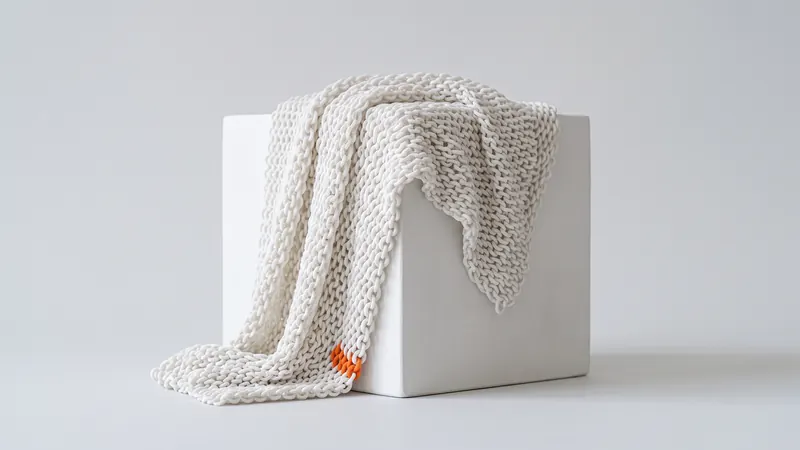
3D-printed chainmail and fabrics are made of many small links or tiles that are printed already interlocked, so the result drapes and folds like a textile. Selective laser sintering is the classic process for them: the loose powder supports every link, and no support structures have to be removed from between the rings. This guide explains how printed fabrics work, what makes them print well in PA 12, how size and pricing work and what to expect from the finished piece.
How printed fabrics work
A printed fabric is a network of small rigid elements connected so that each can move relative to its neighbors. The material itself does not have to bend; the fabric gets its flexibility from the play in the joints. Common designs:
- Ring chainmail: each ring passes through several neighbors, as in traditional mail.
- Tile fabrics: flat tiles connected by small loops or hinges underneath, with a closed surface on top.
- Chains: a single line of links, for straps, bands and decorative chains.
- Kinematic structures: triangulated tiles that fold along any curve, often used for jewelry and design objects.
Why SLS is the process for printed fabrics
In SLS the parts grow in a bed of PA 12 powder. Powder that is not fused stays loose and carries every link, so closed rings, interlocked loops and dense tile patterns need no support structures at all. In filament or resin printing, every link would need supports, and removing them from between the rings is practically impossible. The same principle is behind print-in-place hinges and moving assemblies.
PA 12 also suits the use: EOS gives PA 2200 a density of 0.93 g/cm³, so even a large piece stays light, and the material is tough enough for links that are bent and pulled when the fabric is handled.
Design rules for printed chainmail
- Gap of at least 0.5 mm. Between every two links, keep at least 0.5 mm all around. Powder grains next to a fused surface partly melt and stick to it; links that are too close fuse together.
- Links strong enough to handle. The calculator warns about walls thinner than 0.8 mm, and thin links can break during depowdering and blasting. Make ring cross-sections and tile hinges comfortably thicker than that.
- A way out for the powder. Every gap is full of powder after printing. Open link shapes and short gaps clean out easily; closed pockets and long, narrow gaps keep powder.
- Enough play. The more clearance in each joint, the softer the fabric drapes, and the easier it is to clean. A very tight fabric is stiffer and harder to depowder.
- Test a swatch. Print a small square first to check flexibility, look and cleaning. A swatch is small and costs little.
The general rules are in the SLS design guidelines.
Size and folding
Our chamber is 200 × 250 × 330 mm, and the calculator checks whether the uploaded shape fits, including tilted positions. A flat piece of fabric larger than that can still be printed if it is designed folded, rolled or compacted in CAD, so that the printed shape fits the chamber and the fabric opens up after depowdering. Two things to keep in mind: a compacted fabric holds more powder, so cleaning takes more care, and the folded shape is what is priced. Alternatively, print the fabric in panels and connect them with links afterwards.
How the calculator handles chainmail files
A chainmail model is a file with many separate solids. The calculator splits multi-body files into parts, but bodies whose bounding boxes touch or overlap are kept together as one part. Interlocked links overlap, so a whole fabric is priced as one part, from its volume and its size like any other part. Separate pieces in the same file, for example two unconnected panels, are recognized as separate parts, and identical separate pieces are merged into the quantity. More in units, scale and multi-body files.
Check the units before you upload: an STL is read in millimeters, with a switch to inches in the calculator; STEP files carry their unit.
Finish and color
After depowdering, every part is glass-bead blasted and polished in a DyeMansion Powershot DUAL. Blasting also clears powder from between the links and smooths the contact surfaces, so the fabric moves more freely. Dyeing with TCN liquid dyes colors the surface layer without a coating, so it does not close the gaps. Black and orange are in stock; the other 59 colors add about one month (20 working days) to the delivery time, at the same price. See dyeing SLS parts.
Typical uses
- Costume, cosplay and stage pieces
- Fashion accessories, jewelry and design objects
- Flexible covers and decorative panels
- Product demonstrations and trade-fair samples that show what SLS can do
- Bands, straps and chains for devices
Printed nylon chainmail is a flexible, decorative structure. It is not protective equipment, and we make no claims about protection against cuts, impacts or other hazards.
Frequently asked questions
How is 3D-printed chainmail made?
The links are modeled already interlocked and printed in one piece. In SLS the unfused powder supports every link during printing, so there are no supports to remove. After printing, the powder is removed from between the links and the fabric moves freely.
Why is SLS best for 3D-printed fabric?
Filament and resin printing need supports under overhangs, and supports between interlocked links are almost impossible to remove. SLS needs no supports, so closed rings, hinged tiles and dense link patterns are printed as designed.
How large can a printed fabric be?
The printed shape must fit our chamber of 200 × 250 × 330 mm. Larger fabrics can be designed folded or compacted in CAD so they fit, and unfold after depowdering; the calculator checks the fit of the shape you upload.
How is a chainmail file priced?
The calculator splits multi-body files into parts, but bodies whose bounding boxes touch or overlap count as one part. Interlocked links therefore form one part, priced like any other part from its volume and size.
Can 3D-printed chainmail be dyed?
Yes. Parts can be dyed in one of 61 colors; the dye penetrates the surface rather than coating it, so it does not close the gaps between links. Black and orange are in stock; other colors add about one month.
Get an instant price
Upload STEP or STL files to the calculator and see the price of your parts in seconds: white Nylon PA 12, blasting and polishing included, optional dyeing in 61 colors, three delivery speeds. From there you send the order preview for confirmation.
Another material, an NDA or a large series? Write to us. For design help and prototype development see prototype.builders.
Get an instant price