
Rapid Prototyping with SLS: Functional Prototypes in Nylon PA 12
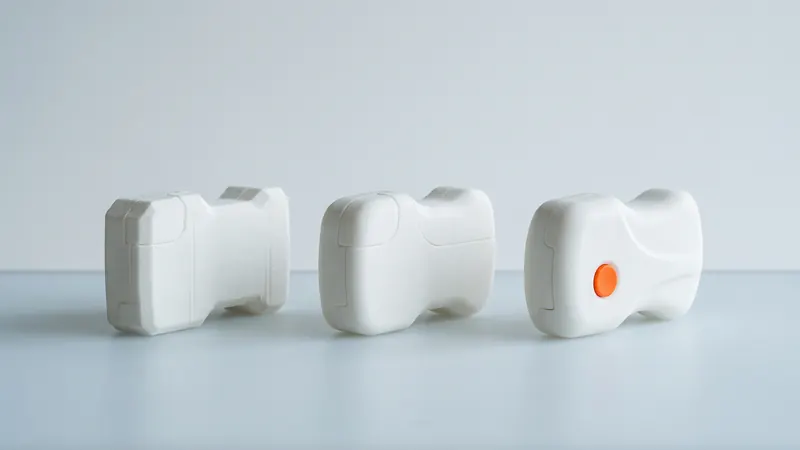
Rapid prototyping means getting a physical part into your hands quickly, testing it and improving the design in short loops. SLS 3D printing is particularly suited to functional prototypes: the parts are made from tough PA 12 nylon, need no support structures and can be tested like real parts. This guide shows what SLS prototypes are good for, how to plan fast iterations and how a prototype becomes a series part.
What SLS prototypes are good for
Prototypes have different jobs at different stages. SLS covers most of the functional ones:
| Prototype type | Question it answers | SLS fit |
|---|---|---|
| Concept model | Does the shape and size make sense? | Good; white PA 12 shows the geometry clearly |
| Fit and assembly prototype | Do the parts fit together and with purchased parts? | Very good; design to our tolerance guideline |
| Functional prototype | Does it work under real use: clips, hinges, loads? | Very good; tough nylon, moving parts printable in place |
| Pre-series and test series | Does it work in larger numbers, for field tests? | Very good; same material and process as the series |
| Appearance model | Does it look like the final product? | Good with dyeing; not for gloss or transparency |
Why SLS suits functional prototypes
- Real material properties. EOS gives PA 2200, the PA 12 we print, a tensile strength of 48 MPa in X/Y and 42 MPa in Z, an elongation at break of 18 % and 4 % and a tensile modulus of 1,650 MPa. A prototype can be bent, clipped, screwed and dropped. More in how strong SLS nylon is.
- No support structures. The unfused powder carries the part, so undercuts, internal channels and closed housings are printed as designed, with no support marks to clean.
- Moving parts in one piece. Hinges, chains and joints can be printed assembled with a gap of at least 0.5 mm; see print-in-place hinges and assemblies.
- Snap-fits that can be tested. Clips and latches made of PA 12 flex like real ones; see snap-fit joints in SLS PA 12.
- The same part from prototype to series. If the product will be made by SLS, the prototype is already the series part.
A fast iteration loop
- Upload STEP or STL. The calculator shows the price in seconds and runs a design review: thin walls, enclosed cavities and other notes appear before you order.
- Choose the delivery level. Express when the prototype is on the critical path, Standard or Economy when the next test can wait.
- Order variants together. If you are unsure about a clearance, a wall or a snap hook, upload two or three versions in the same order.
- Test, measure, note. Measure fits, try the assembly, load the part as it will be loaded in use.
- Change the CAD and upload again. A design change costs nothing more than a new upload; there is no tool to modify.
Your requested quotes stay in your account, so you can compare revisions and reorder a previous one if needed.
Test coupons save iterations
For details that decide whether a design works, print a small test coupon first: a strip of snap hooks with several thicknesses, a row of holes and pins with different clearances, or a few wall thicknesses side by side. A coupon is small, so it costs little, and it answers in one order what would otherwise take several. Start from our design guideline of ±0.3 % (at least ±0.3 mm) and the clearances in SLS tolerances and clearances.
Designing prototypes for SLS
- Walls: about 1.5 to 3 mm for housings and brackets; the calculator warns below 0.8 mm.
- Hollow parts: give each cavity at least two escape holes of at least 5 mm so the powder can be removed.
- Holes: design to nominal and ream or drill where you need an exact diameter; small holes come out slightly smaller.
- Threads: for repeated assembly use inserts; see threads and heat-set inserts.
- Layer plane: parts that flex are strongest when they bend within the layer plane. In the calculator you can choose the layer plane per part (XY, XZ or YZ) or let us decide.
The full rulebook is in the SLS design guidelines.
Finish and color for prototypes
Every part is glass-bead blasted and polished in a DyeMansion Powershot DUAL, which gives a clean, even matte surface. For presentation models or to tell variants apart, parts can be dyed in one of 61 colors. Black and orange are in stock and keep the delivery time of the chosen level; the other 59 colors add about one month (20 working days), so for fast iterations, white, black or orange are the practical choice. See SLS post-processing and surface finish.
When another process is better
- Transparent or very fine visual detail: resin printing (SLA) gives smoother surfaces and finer features; see SLS vs SLA.
- Rubber-like parts: we print PA 12 only; elastic materials need another process.
- Metal parts or very tight tolerances: machining is the better choice; see SLS vs CNC machining.
- Quick, rough shape checks: a desktop FDM print can be enough; see SLS vs FDM.
From prototype to series
When the prototype works, the next question is how to make more. With SLS, the same file and the same options give the same part, so a pilot series can follow directly; see small-batch production with SLS. For larger quantities, compare with molding in SLS vs injection molding. If you need help with the design or the development of the product itself, the team at prototype.builders can take it on.
Frequently asked questions
What is rapid prototyping?
Rapid prototyping is the quick production of physical models or functional parts directly from CAD data, so a design can be tested and improved in short iterations. 3D printing processes such as SLS, SLA and FDM are the most common methods.
Why use SLS for prototypes?
SLS prints tough PA 12 parts without support structures, so complex shapes, snap-fits, hinges and assemblies can be tested as functional parts. The prototype is made from the same material as a later SLS series part.
How fast can I get an SLS prototype?
The calculator shows the price immediately after upload, and you choose the delivery level: Express, Standard or Economy. Black and orange parts keep that delivery time; the other 59 colors add about one month.
Can I test several variants at once?
Yes. Upload several variants or a test coupon with different clearances and wall thicknesses in one order. Testing them side by side is often faster than ordering one variant after another.
When is SLS not the right prototype process?
When you need transparent parts, rubber-like materials, very fine visual detail or a metal part. For those, SLA, other materials or machining are better. For design and development help, prototype.builders can assist.
Get an instant price
Upload STEP or STL files to the calculator and see the price of your parts in seconds: white Nylon PA 12, blasting and polishing included, optional dyeing in 61 colors, three delivery speeds. From there you send the order preview for confirmation.
Another material, an NDA or a large series? Write to us. For design help and prototype development see prototype.builders.
Get an instant price